BPC-157
Tissue Repair Research
$25.00
Out of stock
Product Description
BPC-157 (Body Protection Compound-157) is a synthetic pentadecapeptide derived from a fragment of a naturally occurring protein found in gastric juice. In research literature, it has been examined for its involvement in cellular repair processes, angiogenesis-related pathways, and gastrointestinal mucosal integrity in preclinical models.
Researchers study BPC-157 to explore mechanisms associated with tissue repair, vascular signaling, inflammatory modulation, and nervous system response under controlled laboratory conditions. Its stability and biological relevance make it a commonly referenced compound in studies focused on recovery, regeneration, and protective signaling pathways.
This compound is not intended for human or animal use, and is not designed for therapeutic, diagnostic, or clinical applications. All use must remain strictly within qualified research settings.
Important Notice
For research purposes only. Not for human or animal use & not FDA-approved.
By purchasing, you confirm you are 21 years of age or older and a qualified researcher.
High purity (≥98%) to support reproducible experimental outcomes
Biologically relevant peptide fragment derived from endogenous protective proteins
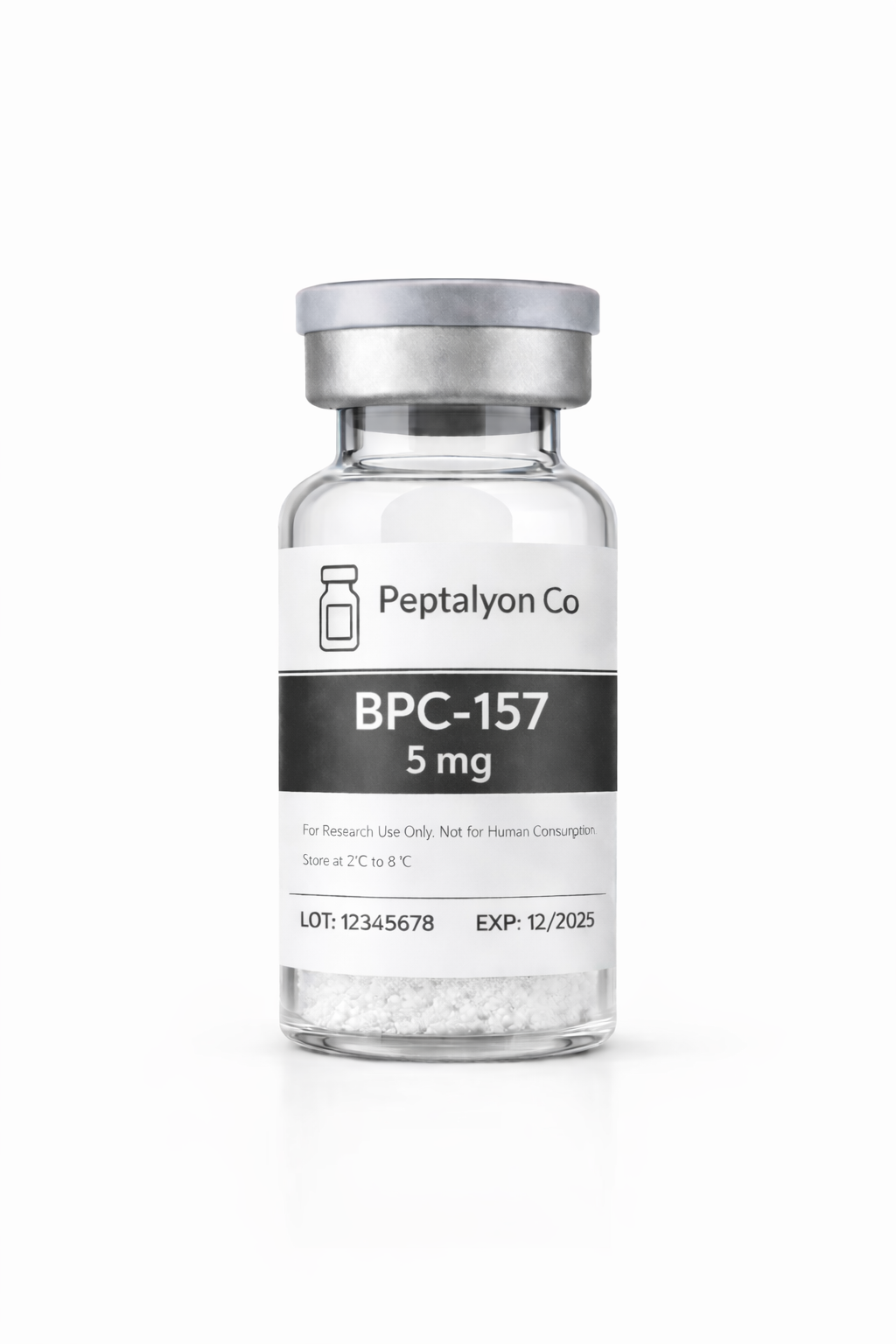
Lyophilized format for stability and consistency during storage
Compatible with standard laboratory handling and reconstitution protocols
Referenced across multiple preclinical research domains, including tissue repair and vascular biology
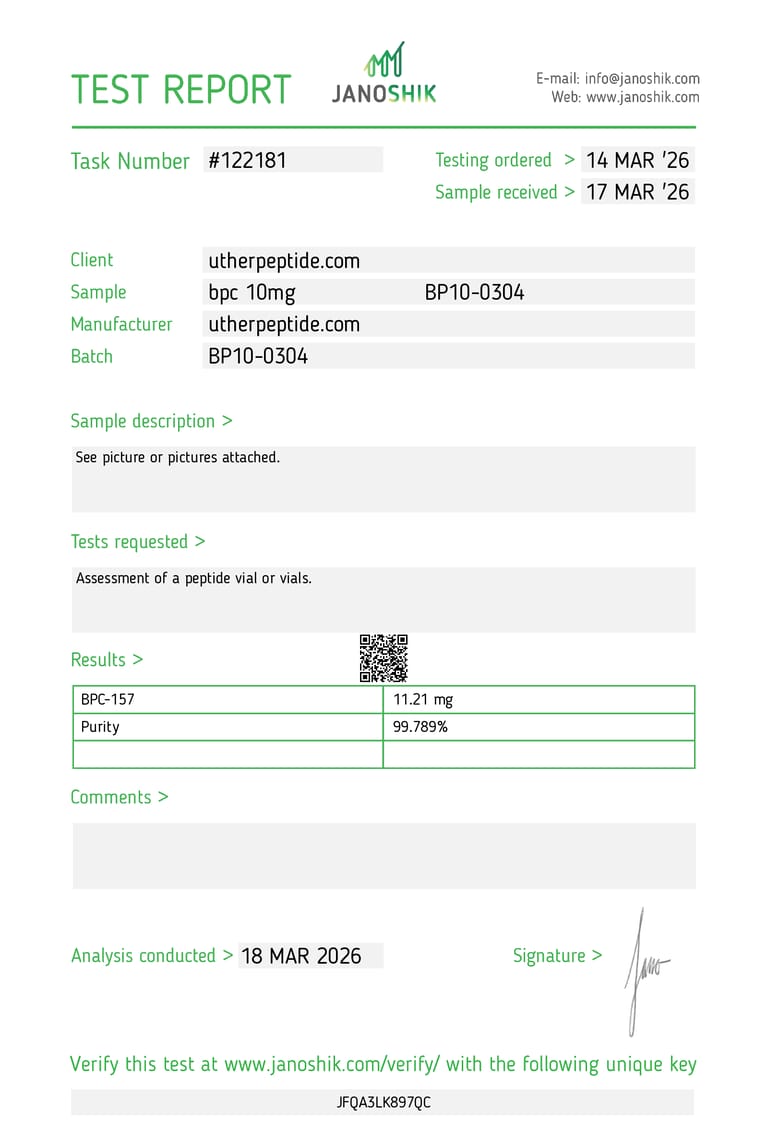
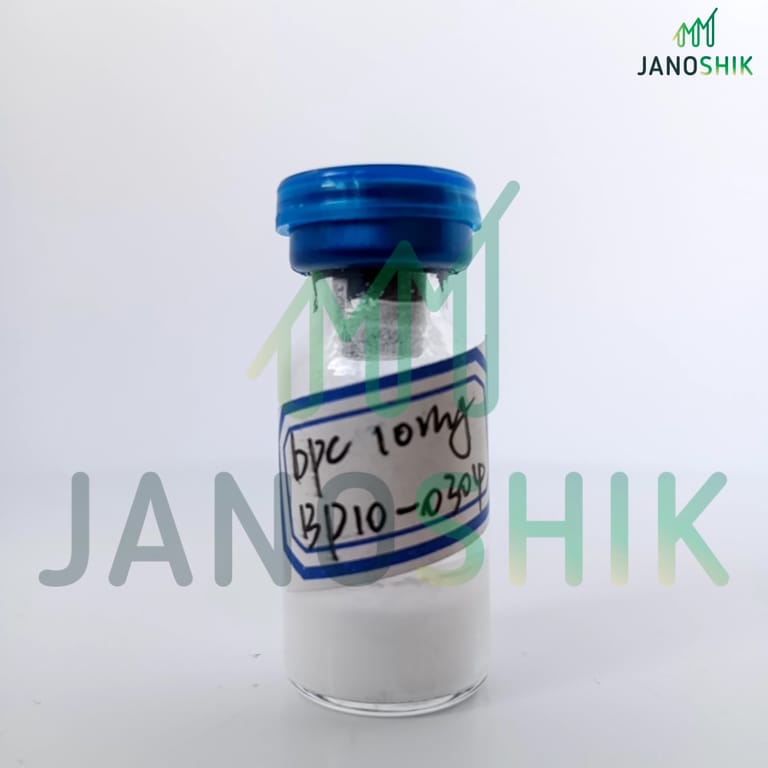
Batch tested for identity and purity verification
Tissue Repair & Regenerative Pathways
Preclinical research models investigate BPC-157 for its interaction with cellular repair mechanisms involved in tendon, ligament, and muscle tissue response following injury.
Angiogenesis & Vascular Signaling
Studies examine how BPC-157 may influence angiogenic signaling pathways, supporting research into vascular growth and tissue perfusion in ischemic and wound-healing models.
Gastrointestinal Mucosal Integrity
BPC-157 is frequently studied for its role in gastric and intestinal mucosal protection, including maintenance of epithelial barrier function in experimental gastrointestinal models.
Neuroprotective & Neural Response Research
Animal and cellular studies explore potential interactions between BPC-157 and neural repair signaling pathways, contributing to research into nerve injury and recovery mechanisms.
Vukojević J et al. (2017). BPC-157 and Tendon Healing: Evidence from Animal Studies.
Journal of Orthopaedic Research
https://onlinelibrary.wiley.com/doi/10.1016/S0736-0266(03)00110-4Sikiric P et al. (2018). Angiogenesis Effects of BPC-157 Peptide in Ischemic Models.
Current Pharmaceutical Design
https://link.springer.com/article/10.1007/s00109-016-1488-ySikiric P et al. (2014). BPC-157 as a Novel Agent for Gastrointestinal Mucosal Protection.
Current Pharmaceutical Design
https://link.springer.com/article/10.1007/s10787-024-01499-8Gwyer D et al. (2020). BPC-157 and Neural Repair Mechanisms in Preclinical Research.
Neural Regeneration Research
https://josr-online.biomedcentral.com/articles/10.1186/s13018-019-1242-6