
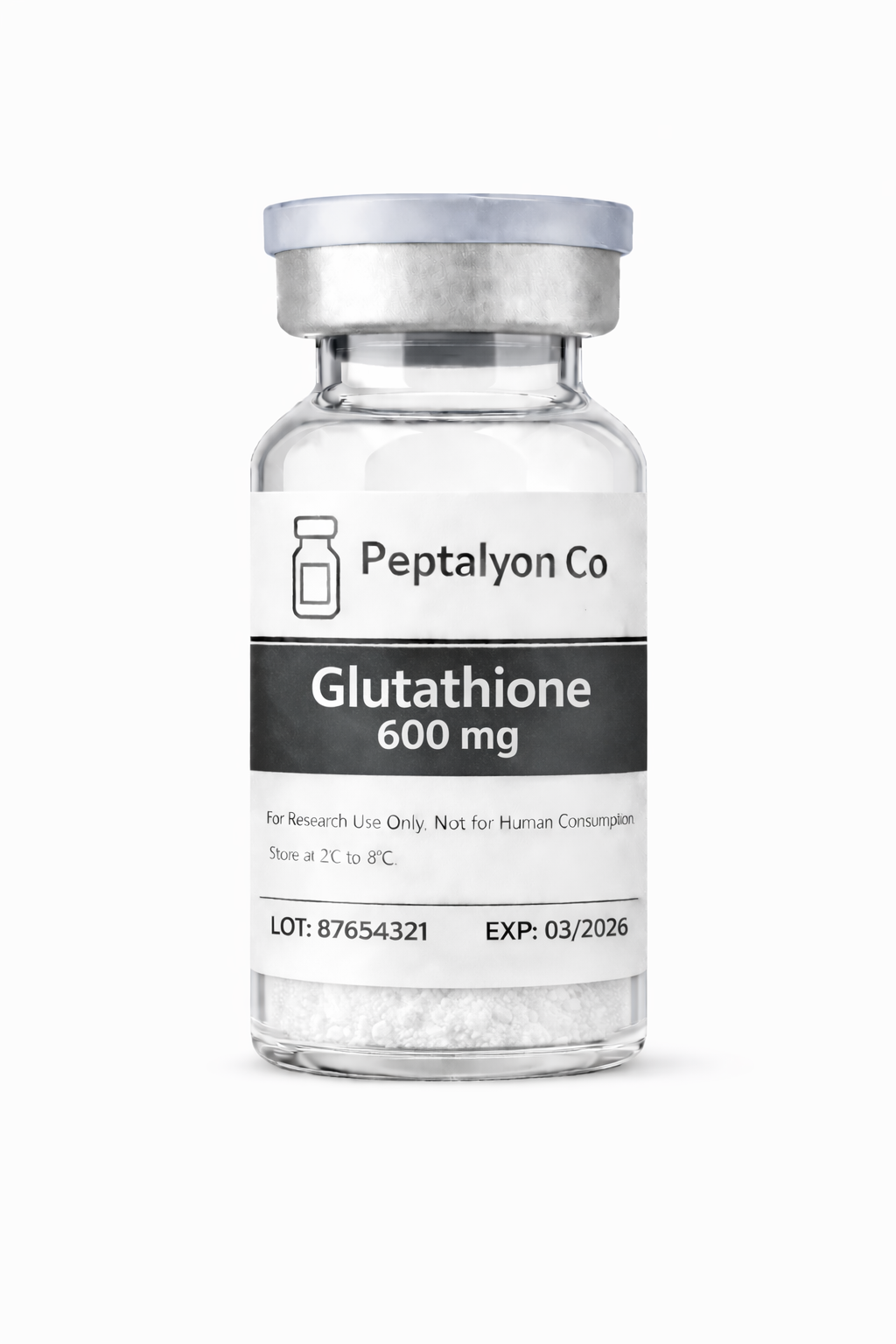
Glutathione
$74.99
Out of stock
Product Description
Description:
Glutathione is a naturally occurring tripeptide composed of glutamine, cysteine, and glycine. It is widely studied in laboratory settings for its role in cellular defense, oxidative stress response, and detoxification pathways.
As a key intracellular antioxidant, Glutathione has been the subject of extensive in vitro research related to free radical neutralization, cellular integrity, and metabolic processes. Its involvement in redox balance and enzyme function makes it a valuable compound in biochemical and cellular research environments.
Important Notice
For research purposes only. Not for human or animal use & not FDA-approved.
By purchasing, you confirm you are 21 years of age or older and a qualified researcher.
Glutathione is widely used in laboratory research due to its central role in maintaining cellular health and protecting against oxidative stress. As one of the body’s most abundant intracellular antioxidants, it serves as a key model compound for studying a variety of biological processes.
1. Central Role in Antioxidant Defense
Glutathione directly neutralizes reactive oxygen species (ROS), making it essential in studies focused on oxidative stress, cellular damage, and free radical activity.2. Critical for Redox Balance
Researchers use glutathione to examine redox regulation within cells, helping to understand how cells maintain stability under stress and how imbalance may impact biological systems.3. Involvement in Detoxification Pathways
Glutathione plays a major role in conjugation and detoxification processes, making it valuable in research involving toxin metabolism and cellular defense mechanisms.4. Indicator of Cellular Health
Because glutathione levels are closely tied to cellular function, it is often used as a biomarker in studies related to aging, stress response, and overall cell viability.5. Broad Application Across Research Fields
Glutathione is studied in a wide range of laboratory settings, including:Cellular biology
Biochemistry
Toxicology
Mitochondrial function research
Enzyme activity and metabolic studies
Oxidative stress and free radical activity
Cellular detoxification pathways
Redox balance and mitochondrial function
Enzyme activity and metabolic processes
Forman, H. J., Zhang, H., & Rinna, A. (2009).
Glutathione: Overview of its protective roles, measurement, and biosynthesis.
Molecular Aspects of Medicine, 30(1–2), 1–12.
https://doi.org/10.1016/j.mam.2008.08.006
Wu, G., Fang, Y. Z., Yang, S., Lupton, J. R., & Turner, N. D. (2004).
Glutathione metabolism and its implications for health.
The Journal of Nutrition, 134(3), 489–492.
https://doi.org/10.1093/jn/134.3.489